I was working with a talented writer who’d spent six months not finishing his novel. He believed in the book and wanted to finish it. He also knew that when he followed my process, he wrote. Nevertheless, the final chapters remained safely unwritten, where they could still be excellent.
An unfinished book can be anything. A finished book has actual sentences in it, and people may have opinions about them. He thought he needed more discipline. He didn’t. He needed to feel safe enough to write.
Writing Makes Things Visible

Writing asks you to make something original, which means leaving what’s known, even when what’s known isn’t especially pleasant. The creative part of you wants to wander off, follow an image, listen to a character, admit what you feel, and see what happens. Another part would much rather stick with what has worked before.
We call the conflict procrastination, resistance, self-sabotage, laziness, fear of failure, fear of success, and various other things that make the writer sound like the problem. But the part stopping you may not be trying to ruin your work. It may be trying to spare you from whatever it thinks will happen once the work is finished.
A finished book can be judged or rejected. It can also succeed, which brings its own complications. More importantly, writing can reveal what you think, what you want, whom you resent, and what you can no longer pretend not to know. You may begin with a furious character and discover that you’re furious. You may write about a marriage and recognize your own, or describe someone who continually gives away authority and realize the description isn’t entirely fictional. Once you see something clearly, it can be hard to go back to not seeing it. That may be exactly what the more cautious part of you is trying to prevent.
You Need the Whole Car
I was working with a writer who had been meditating and keeping a gratitude journal. I think the world of gratitude. I’m still amazed by the way it can shift you from being furious about sitting in a traffic jam to remembering that you have a car in the first place.
Gratitude is a useful practice, but like any practice, it can also become a way of avoiding something you don’t want to feel. In this case, the writer was angry. Gratitude isn’t a disposal system. If you’re angry and write that you’re grateful for sunshine, the anger doesn’t leave. It waits. Suppressed emotions are patient.
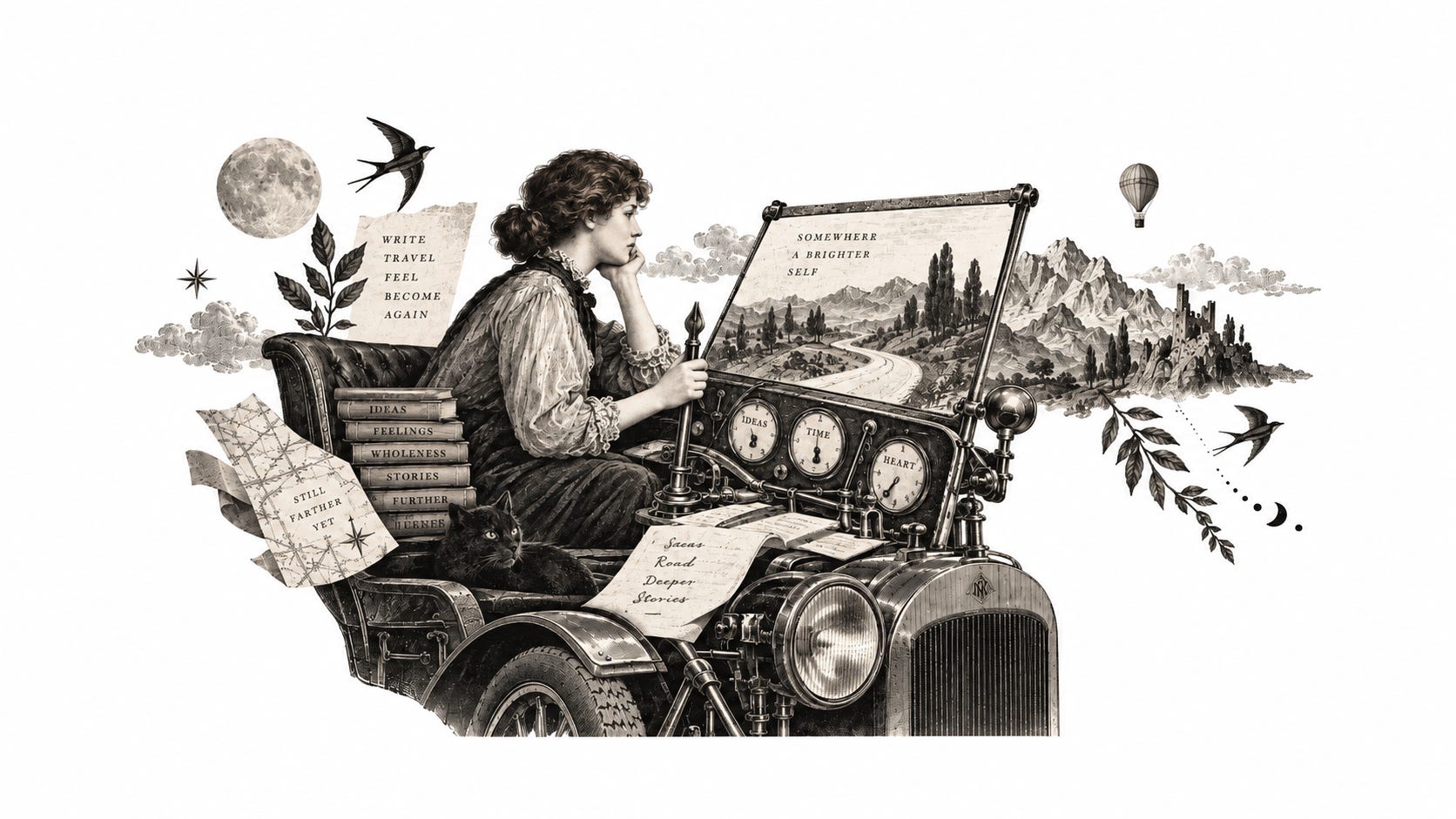
Think of your creative system as a car. You’re the driver. You may not have chosen this particular car or everything that came with it, but it’s the one you have. If you want to drive, you need the whole thing. Imagine that anger is the engine, fear is one of the tires, and resentment is another necessary part. You may dislike these parts or wish you’d been issued a different model. Nevertheless, removing the engine doesn’t improve the car. It prevents it from moving.
You can’t throw anger, grief, resentment, fear, or shame out of the car and expect the rest of the system to work normally. If you want to write freely, you need access to all of it. The question is what to do with the parts you wish weren’t there. Ignoring them doesn’t make them disappear. Judging them doesn’t help much either. Pretending to feel something more acceptable can simply push the feeling out of sight, where it keeps interfering with the writing. You need some way to notice what’s there, let it speak, and keep it from taking over.
The Word of the Day Cluster Technique

The Word of the Day Cluster Technique gives you a concrete way to work with an emotion you’d rather not have. Instead of beginning with a neutral word, choose one that gets close to what you’re actually feeling: anger, fear, jealousy, shame, resentment. Add four or five words that come from that first word, then write from the cluster without judging, editing, or trying to make the writing good.
Start by admitting the feeling is there. You don’t have to approve of it, justify it, or act on it. You only have to stop pretending it isn’t present. Then follow the cluster and write what’s actually there. Don’t clean it up, make it reasonable, or replace it with gratitude. This isn’t a declaration of your permanent beliefs. It’s simply what was true enough to come out of you at that moment.
The page gives the feeling a boundary. Anger can be written without going into an email. Resentment can stay on the page instead of being delivered to the person who inspired it. Fear can be looked at without being put in charge. That’s part of what makes the technique useful: the feeling gets somewhere to go.
The Page Is the Container

The page is what makes this kind of expression safer. It gives difficult feelings somewhere to go and somewhere to stop. They’re no longer hidden, but they also aren’t loose in your life. You can write something without sending it, admit a feeling without acting on it, and explore what’s true in this moment without deciding it will be true forever. Writing gives you enough distance to look at the experience instead of simply being inside it.
That’s the difference between containment and suppression. Suppression says, “This can’t be here.” Containment says, “This is here, and I can hold it.”
Wholeness Creates Safety
Feeling safe enough to write doesn’t require getting rid of every difficult emotion. That would be both impossible and, for a writer, probably undesirable. What helps is knowing you have somewhere to put what comes up. Over time, the part of you that wants to keep things under control can begin to discover that anger, fear, resentment, or shame can be felt without wrecking the day or making the decisions. Once those feelings have somewhere to go, you don’t have to work quite so hard to keep them out of sight. More of you is available for the writing.
Now You Can Drive
Writer’s block is usually presented as a contest. The writer must defeat resistance, silence the inner critic, force out the pages, and win. That creates a great deal of combat, but it doesn’t necessarily create a book.
The part stopping you may be working with old information, bad information, or information acquired from people who were frightened by your originality. But it’s still trying to protect you. You don’t have to destroy it. You have to show it that you can safely handle what the writing may uncover. Choose the word. Build the cluster. Put what is actually there onto the page, and let it take its place in your creative system rather than treating it as something that disqualifies you from writing.
You may not have chosen the car or all the parts that came with it, but it’s the car you have. You need the whole thing. Now you can drive.