

Why Visualization Can Backfire
and What to Do Instead

()
“I’ve lived through some terrible things in my life, some of which actually happened” - Mark Twain
We all have scary stuff in our lives, but it can be less scary if you use a technique that doesn’t have the solution haunt you. It’s a way of dealing with those things without letting them live in your head rent-free.
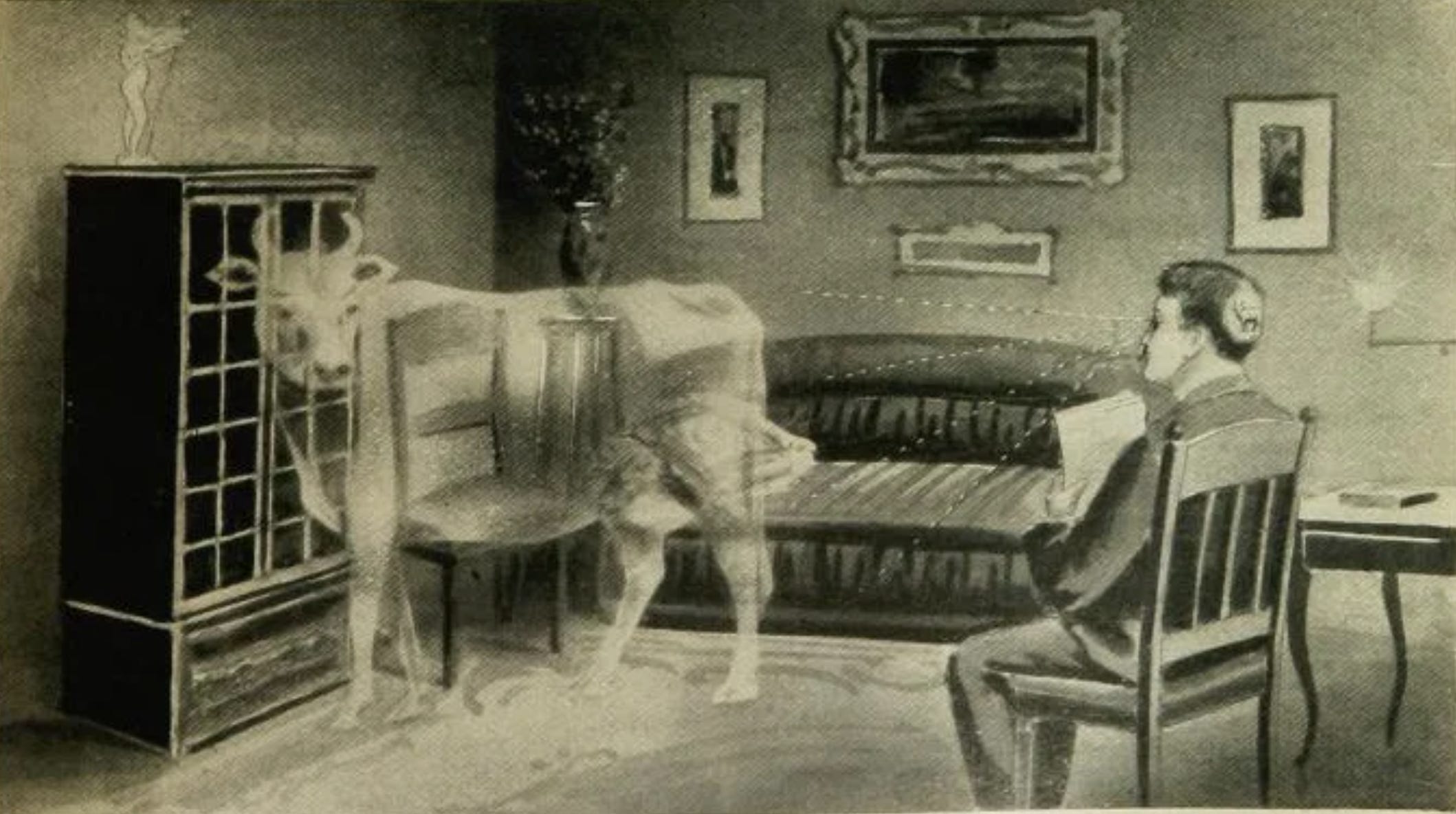
For a long time, we’ve been told to visualize what we want. Picture the outcome, see it clearly, imagine it happening, and hold the image. This idea didn’t come out of nowhere. It comes from the New Thought movement of the late nineteenth and early twentieth centuries, a philosophy that emphasized the power of thought, belief, and inner conviction to shape reality. Writers like Florence Scovel Shinn, author of The Game of Life and How to Play It, helped bring these ideas into everyday language.
The premise is appealing. If thought influences experience, then perhaps directed thought can improve experience. And sometimes that is true. But there is a hidden problem in how this idea has been passed down. Visualization works well when the whole system is aligned. It works much less well when it isn’t. If you try to picture an outcome that some deeper part of you does not believe is possible, the exercise can quietly work against you. Instead of creating calm, it creates strain. Instead of building conviction, it highlights the gap between what you are trying to believe and what you actually feel.
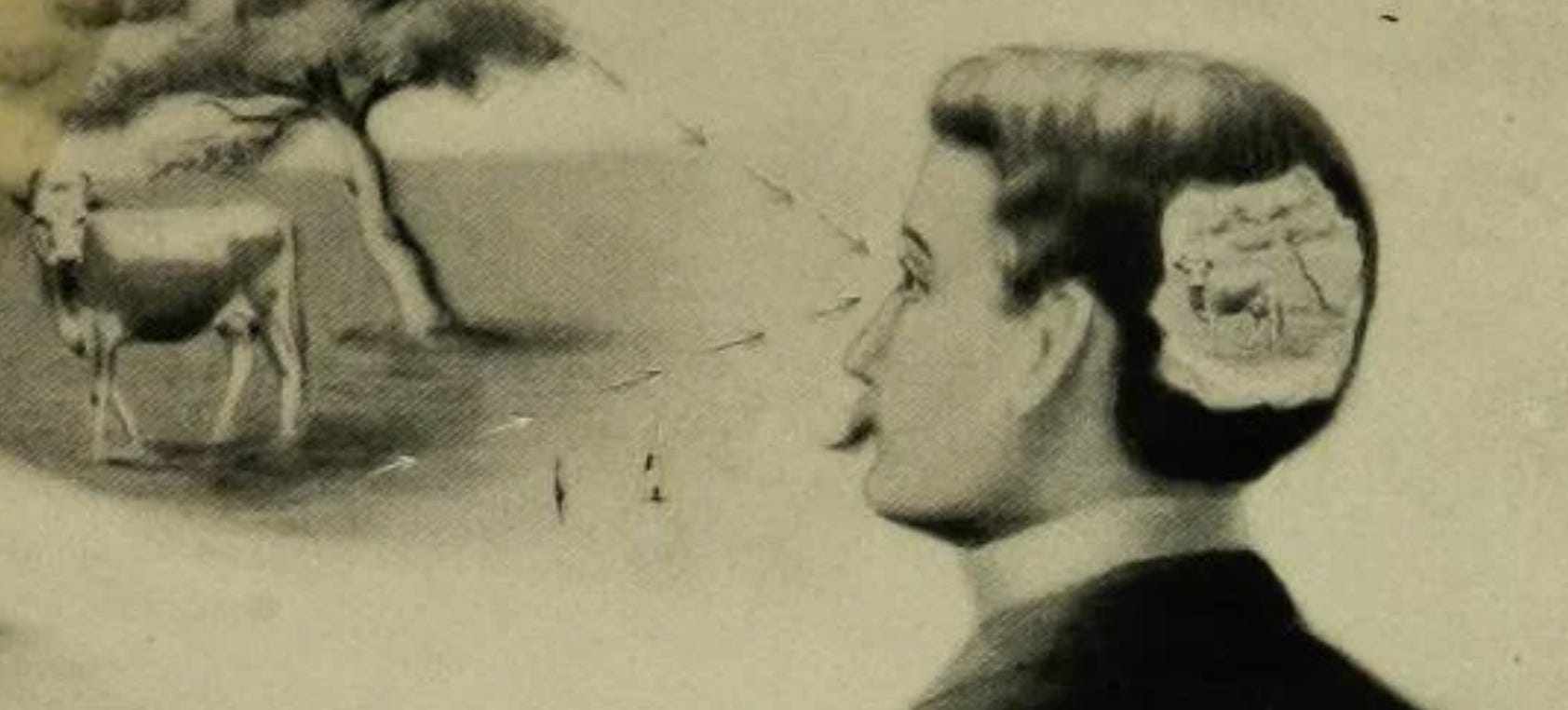
There is another issue that is rarely discussed. Mental imagery is not neutral. When you create images in your mind, your body responds. This is why visualization can be useful in performance settings, but it is also why it can be dangerous when applied to fear-based situations. If you are visualizing illness, loss, or worst-case scenarios, you are not just thinking about them. You are, in a meaningful way, experiencing them. And those images don’t simply disappear when you are done. They linger, they repeat, and they take up space in your mind long after the exercise ends. Encouraging people to visualize everything without understanding this can be extremely destructive.
The issue, then, is not that visualization is wrong. It is that it is often misused. Part of the confusion comes from how we think about the mind itself. It can be useful to think in terms of three layers, not as strict science, but as a working model. The conscious mind manages daily life. It handles details, organizes tasks, and keeps things moving. It is necessary, but limited. The subconscious holds experience. Memory, conditioning, emotional patterns, and associations live there. It is powerful, but it is not inherently wise or moral. It stores and repeats. And then there is what many traditions have called the superconscious.
People use different language for this, which is helpful to recognize. It may be called the higher self, the inner guide, the intuitive mind, the divine within, the Christ within, higher consciousness, or simply a deeper intelligence. These are not identical ideas, but they point in a similar direction: a level of awareness that is broader and less reactive than ordinary thought, and often capable of producing insight that does not come from step-by-step reasoning.
The problem is not that these layers exist. The problem is that we have confused their functions. We expect the conscious mind to solve everything. We sit and think harder, push harder, and when that does not work, we are told to visualize harder. So now we are not only thinking in circles, but we are also generating images that increase emotional pressure. It is not surprising that people feel overwhelmed.
Florence Scovel Shinn offered a different move. Instead of forcing the conscious mind to solve the problem, she suggested acknowledging that it cannot. Her phrase is simple: “I cast this burden on the Christ within, and I go free.” You do not have to take the language literally to understand the function. The point is that you stop insisting that your conscious mind produce the answer and instead release the problem to a deeper level of awareness. That shift replaces strain with trust.
Faith, in this context, is not pretending to believe something you do not. It is not creating an image and trying to force conviction. It is acknowledging that there are parts of you that are more capable than your immediate thinking. My own experience has led me to something similar, though through a different method. Through the Self-Acknowledgment Hug, I have found that physically stabilizing myself creates access to that deeper layer more reliably than mental effort alone. When I hold myself and say, “I love you,” something settles. The urgency drops. The system quiets. I am no longer trying to solve a problem while being emotionally activated by it. I am in a position to receive something.
Recently, I decided to try Shinn’s technique directly on something small. I am a petite person, and my cat, Spooky, is not. Every time I sit at my desk, he wants to sit in my lap, which I do not really have. He ends up half on me and half off, and neither of us is comfortable. This morning, before sitting in my chair, I remembered the problem and acknowledged that I had no idea how to solve it. So, somewhat self-consciously, I said aloud, “I cast this burden on the Christ within, and I go free.” Then I sat down. Spooky began climbing into my lap as usual, and almost immediately it occurred to me that if I put a yoga block under my feet, my knees would rise to the right angle and create a stable lap. The problem was solved! The cat was satisfied, and I was surprised. It was a small example, but it was precise. The answer did not come from effort. It came from release.
This leads to a practical question. If visualization can create distress, and if forcing the conscious mind to solve everything does not work, how best to think through difficult situations? My answer sounds counterintuitive. Do not picture the situation. Tell it.
As a screenwriter, this is second nature to me. When developing a screenplay, we do not hold the entire story in our heads. We write each scene on an index card and lay them out so we can see the structure. We move them around, adjust the sequence, and work with the story without getting lost inside it. Variations of this same visual-card method are also used in project management, workflow systems, and management planning because they help people externalize complexity, see sequence clearly, and reorganize parts without becoming overwhelmed by the whole.
If you need to think through a difficult situation, do not do it as a mental movie. Write it out step by step. One card at a time. What happens first? What would need to be done? What are the real decisions involved? When you tell the story in words, you stay grounded. You stay practical. You stay in sequence. When you picture it, you risk amplifying emotion and losing structure.
This may sound like perverse advice in a culture that encourages visualization for everything, but for difficult material, it works. You are still planning, still preparing, but you are not distressing yourself in the process.
The result is a much more effective division of labor. The conscious mind handles structure and organization. The subconscious processes experience. And whatever you choose to call the superconscious becomes available when you stop forcing the other two to do their job. We have been trying to do everything with the smallest piece, and that is why it feels so difficult.
If you are dealing with something challenging, the answer may not be to imagine it more clearly. It may be to step back, organize it, and release what you cannot solve directly. Less forcing, less imaging what you do not believe, and more clarity, structure, and trust that you are not limited to the first layer of your mind.
That is not mystical. It is practical, and it’s a way of dealing with those things without letting them live in your head rent-free.