


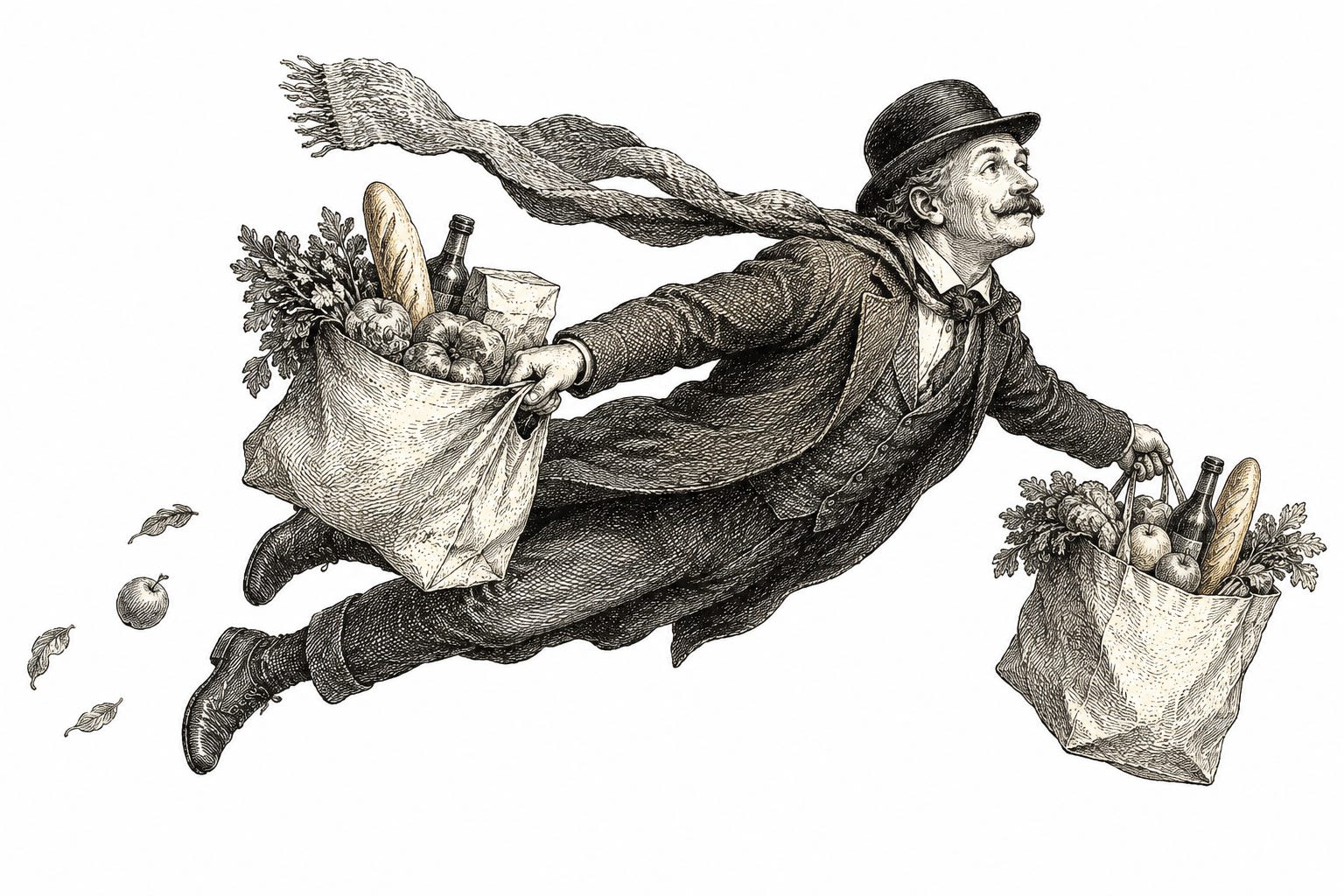
My cleaning lady, Isabel, normally comes on Tuesdays. This week she couldn’t and asked if she could come Monday instead. Monday is a busy day for me, but I was able to accommodate her.
I was sitting on the terrace working on my story when FreshDirect arrived. I didn’t answer the door because I was writing. Isabel took the delivery, put everything away, and left with the FreshDirect bag, which she threw out. At lunchtime I opened the refrigerator and found it full of groceries that weren’t mine.
There was easily more than $200 worth of food in there. I called FreshDirect and explained what had happened. They asked about the bag, but Isabel had already thrown it out and was no longer nearby. I wasn’t going to ask her to go through the garbage. I called FreshDirect again, and the man on the phone listened to the story and said, “Keep the groceries.” They would replace the order for the person who had actually bought them.
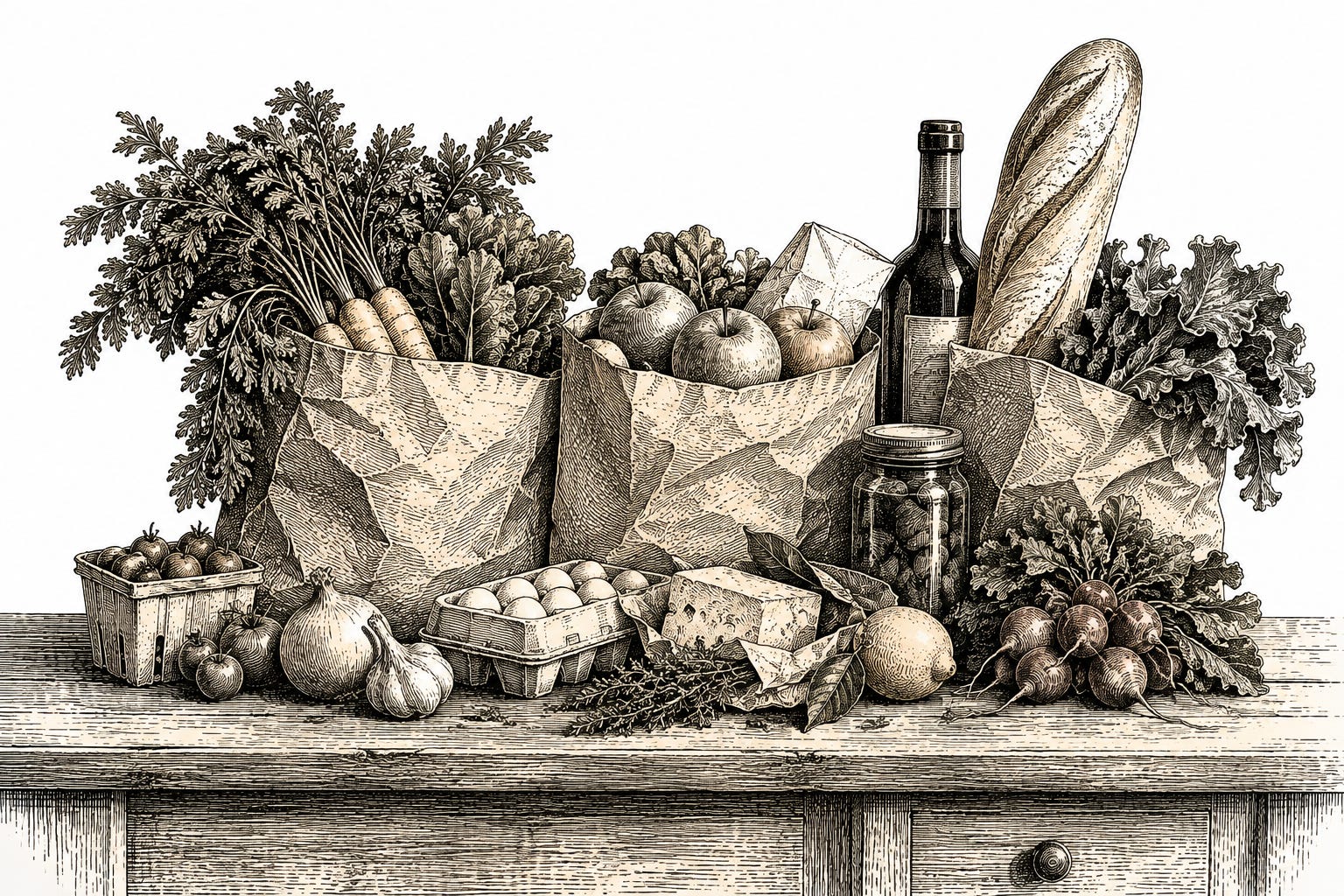
My first thought was that I should give the groceries away. There were things I don’t eat and things I didn’t need. I immediately started thinking about who could use what. Then I stopped. Before I started distributing everything, could I just give myself a minute to receive $200 worth of groceries that seemingly fell out of the sky?
I’m a vision junky. I’ve tried vision boards, affirmations, visualizing what I want, seeing myself having it, feeling as though it has already happened. But something about this never felt quite comfortable to me. Every time I tried to convince myself that I already had something I wanted, another part of my mind noticed that I was doing it because I didn’t have it. So, for the past couple of weeks, I’ve gone cold turkey and stopped trying to visualize the future I want.
Asking for prosperity contains the suggestion that prosperity is somewhere else. Wanting something calls attention to its absence. I always understood this part. What I didn’t know was what to do instead. A couple of weeks ago, I tried something that felt different. I stopped making lists of what I wanted and chose one chief aim: protect and grow my health, wealth, and happiness.
Then I came across an idea that simplified it even further. Instead of spending the day trying to arrange the outside world so that eventually I would feel the way I wanted to feel, perhaps I could find that state first and keep returning to it, regardless of what was happening around me. That made sense to me.
I realized I had already been trying to do some version of this for years. I’ve always taken pleasure in small things: a good cup of coffee, light coming through a window, a piece of writing doing what I wanted it to do. I just hadn’t thought of any of this as a practice.
About a month ago, I realized that some of my tendency not to appreciate what I had wasn’t entirely mine. It was a viewpoint I inherited from my mother. Once I saw that, it occurred to me that I didn’t owe her that kind of loyalty. I could love someone without continuing to look through her eyes. That word, loyalty, makes a pinging sound in my brain, not unlike my phone when a message comes through. Perhaps I’ve been reluctant to allow myself simply to have something, to receive it without immediately looking around to see who else needed a piece.
Nothing outside me changed because I had this thought, but I began enjoying my life more. At about the same time, I had been experimenting with a new writing practice that made me happy. I wasn’t writing toward some distant achievement or because I was supposed to. I got up and enjoyed the work itself.
That was what I had been doing on the terrace when the groceries arrived. Looking back over the morning, I realized how many small changes had made this possible. Isabel was there on a Monday because I had accommodated her. I hadn’t answered the door because I was doing something that made me happy. She had put the food away because neither of us knew it wasn’t mine. By the time I discovered the mistake, the identifying bag was gone.
I’m not suggesting that my writing practice caused FreshDirect to deliver groceries to the wrong apartment. But I was interested in the sequence. I had stopped spending so much time asking life to make me happy and had begun spending more time doing something I enjoyed. While I was doing it, something unexpected arrived.
Standing in front of the refrigerator, I wanted to understand why my first response had been to give it away. Whatever I eventually kept or shared, could I simply let something good have happened to me?
I thought again about my mother. I had spent a long time seeing certain things through her eyes without knowing I was doing it. Perhaps there was another loyalty buried in there too, a feeling that receiving something for myself required an immediate qualification. I could have it, but I should share it. I could enjoy it, but somebody else should enjoy it too. I could have the sandbox, but I had better make room. We’ll talk about my little brother another time.
There is nothing wrong with sharing, but I was beginning to see how quickly I moved past receiving. I could take a moment before deciding what to keep, what to give away, and what I didn’t need. This mattered more to me than I would have expected. For once, I didn’t have to start distributing something before I had even experienced having it.
For years I thought I was supposed to imagine the life I wanted and somehow pull it toward me. Now I was trying to live in the state I thought the imagined life would eventually give me. That morning, it had meant sitting on my terrace, writing a story, and being happy. Now it meant giving myself a minute to enjoy a refrigerator full of groceries. I hadn’t asked for them or visualized them. They weren’t on a vision board. They had arrived while I was living my life, and for about an hour, I thought that was the story.
Then the doorbell rang. It was the FreshDirect driver. He wanted the groceries back. Of course I gave them to him. They weren’t mine.
I was annoyed. By then I had spoken to FreshDirect twice, interrupted my work, and taken time away from my book to write this piece. So I called FreshDirect again. I told them their mistake had taken up my time and I wanted compensation. That wasn’t new; I’ve always understood that my time has value. We negotiated a $20 credit.
I had still enjoyed receiving the groceries, and I had caught myself about to give them away before I’d even had a chance to appreciate them. Returning them didn’t undo that. I didn’t have to keep them forever for that hour to have mattered, or give them away before allowing myself to have them. The groceries came and went, and I went back to writing.