

It's not your fault
The Radical Premise

It’s not your fault.
Not the worry that keeps you up at night.
Not the ways you freeze, run, overwork, or hide.
You weren’t born defective — you were born alive.
Before you had language, your body was already keeping score:
Reading light, sound, touch, smell, tone.
It built a silent map of what kept you safe.
That map still runs beneath everything you do.
It isn’t wrong. It’s ancient.
The Biological Imperative
Science calls it regulation, prediction, and adaptation.
I call it the biological imperative — the body’s command to stay alive at all costs.
It never stops scanning. It watches temperature, tone of voice, credit-card balance, the look in someone’s eyes.
Its only question is: Are we safe?
When the answer feels uncertain, it reacts — faster than thought.
The biological imperative doesn’t care about happiness or meaning; it cares about continuity.
Every habit, defense, and delay is its way of saying, I intend to survive.
So when you feel trapped in a loop, you’re not failing — you’re obeying the oldest law on Earth.
The Three Brains and the Perfect System
You don’t have one brain; you have three, each with its own nervous system and its own intelligence.
The Gut Brain · The Instinctive Network
Your gut is your first responder.
It possesses a nervous system — comprising hundreds of millions of neurons — that senses threats before you can think.
It speaks through tension and release, through butterflies or dread.
Its job is protection: Go. Stop. Run. Wait.
It measures territory and timing.
The Heart Brain · The Relational Network
Your heart has its own small brain, an electrical field that listens for harmony or dissonance.
It decides, Am I connected? Am I loved?
When it opens, we call it trust. When it closes, we call it fear.
Its job is relationship — to keep belonging and safety in balance.
The Head Brain · The Storytelling Network
The head gathers what the gut senses and what the heart feels, then names it.
It turns experience into language, language into story, and story into culture.
Its job is meaning, to make coherence out of chaos.
Together, these three systems form a perfect network.
The gut warns, the heart interprets, the head explains.
When they’re in rhythm, life feels natural.
When they disagree, it’s noisy — but still functional.
On that level, you are operating exactly as designed.
The Split
Then consciousness arrives.
Awareness wakes up inside the system and suddenly there are two of you:
the one who lives and the one who watches.
To see yourself, you have to step away from yourself.
That separation births judgment.
The body reacts; the witness analyzes.
You become both actor and critic in your own play.
The natural system continues to function perfectly, but now it’s being graded.
That’s how the confusion begins — not from dysfunction, but from misunderstanding.
The Language of the Split
You can hear the fracture in how we speak.
Almost everything is either/or: good or bad, right or wrong, success or failure.
That’s the judging witness sorting the world into safe and unsafe boxes.
For twenty-five years, I’ve watched people transform the moment they replace either/or with and also.
You can be frightened and also courageous.
You can be grieving and also grateful.
You can still be healing and also whole.
And also is how the three brains talk when they’re listening to one another again.
It’s the sound of integration.
The Fear of Uncertainty
The biological imperative has one primal terror: uncertainty.
To your survival system, “not knowing” feels like “possible extinction.”
That’s why silence, delay, or ambiguity can flood you with adrenaline.
The body equates uncertainty with threat — because, for most of history, it was.
Consciousness, however, thrives on uncertainty.
It’s how we learn, invent, and evolve.
So the conflict between the body and awareness is really a debate about the unknown.
The body says, If I don’t know, I might die.
Consciousness says, If I don’t wonder, I can’t live.
Peace doesn’t come from choosing sides.
It comes from teaching both truths to coexist.
The body learns that uncertainty can be exploration, not extinction.
The mind learns that safety can be wisdom, not weakness.
When those lessons settle, you stop waiting for certainty before you relax.
The Loop of Blame
Here’s how the modern world exploits that split:
Biology drives behavior.
Culture condemns the behavior.
We internalize the blame.
Then someone sells us redemption.
It’s efficient.
A self-blaming human doesn’t need policing; they’ll police themselves.
But every defense you’ve ever used was an act of loyalty to life.
Once you see that, shame loses its authority.
Awareness as Freedom
You can’t override the biological imperative, but you can befriend it.
When you see your reactions for what they are — protective strategies, not moral failings — you stop being a problem to fix and become a system to understand.
Awareness doesn’t erase the past; it puts you back in dialogue with it.
The moment you can watch your body’s alarm without adding judgment, you step out of the loop.
You stop reacting to the reaction.
You start living as a whole organism again.
The Return
Freedom isn’t transcendence; it’s reunion.
It’s when the witness and the animal remember they’re on the same side.
You stop apologizing for your wiring.
You start listening to it.
The miracle isn’t becoming perfect.
It’s realizing you were always coherent — just misunderstood.
When you stop blaming yourself for being human, the body relaxes, the heart opens, and the mind finally goes quiet enough to tell a new story.
Closing Note
It’s not your fault.
It never was.
And once you know that, you can begin to live.
not merely to survive,
but to participate.
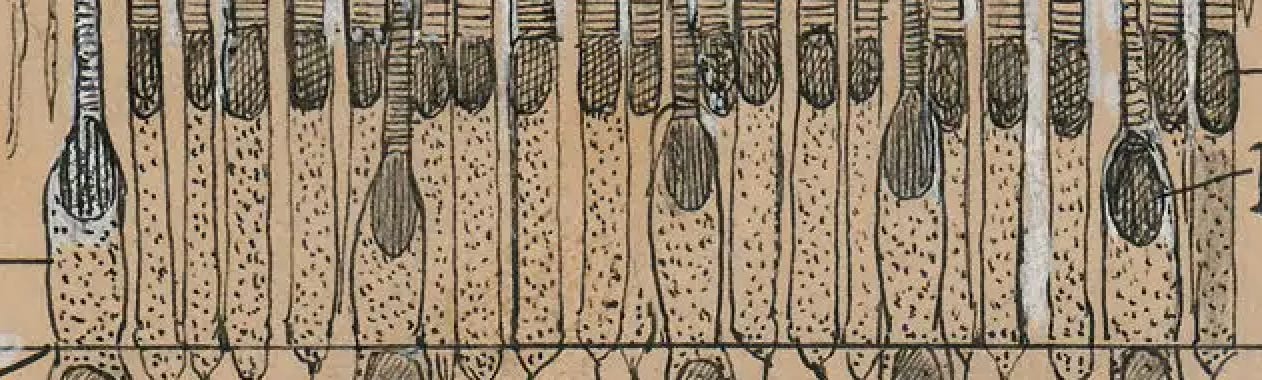
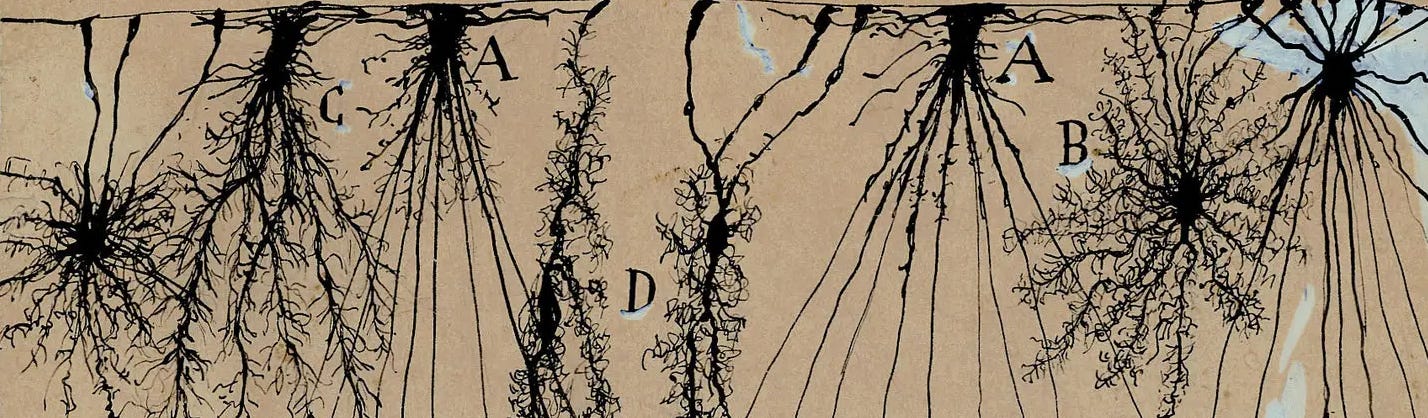
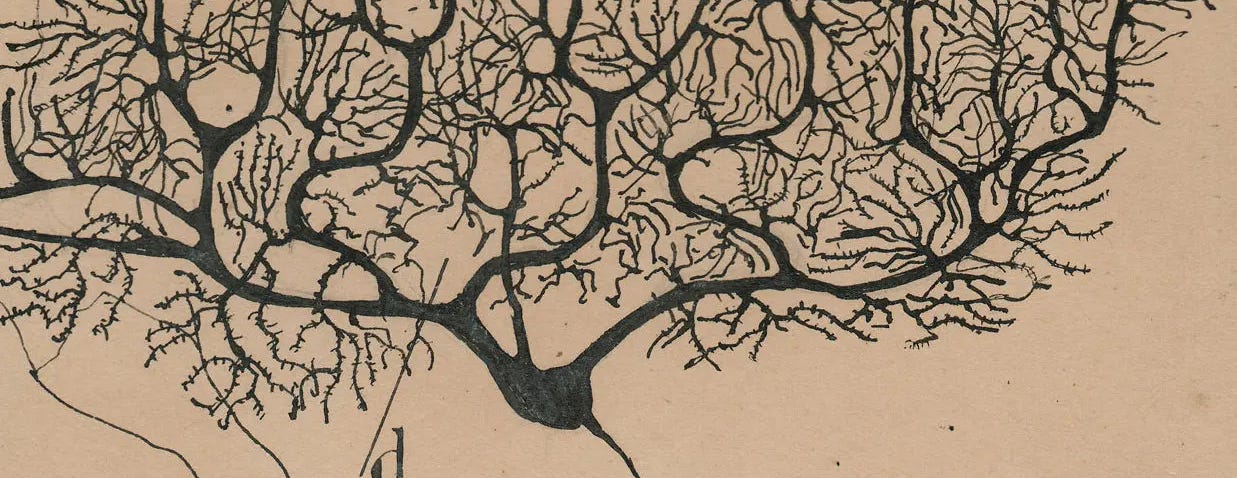
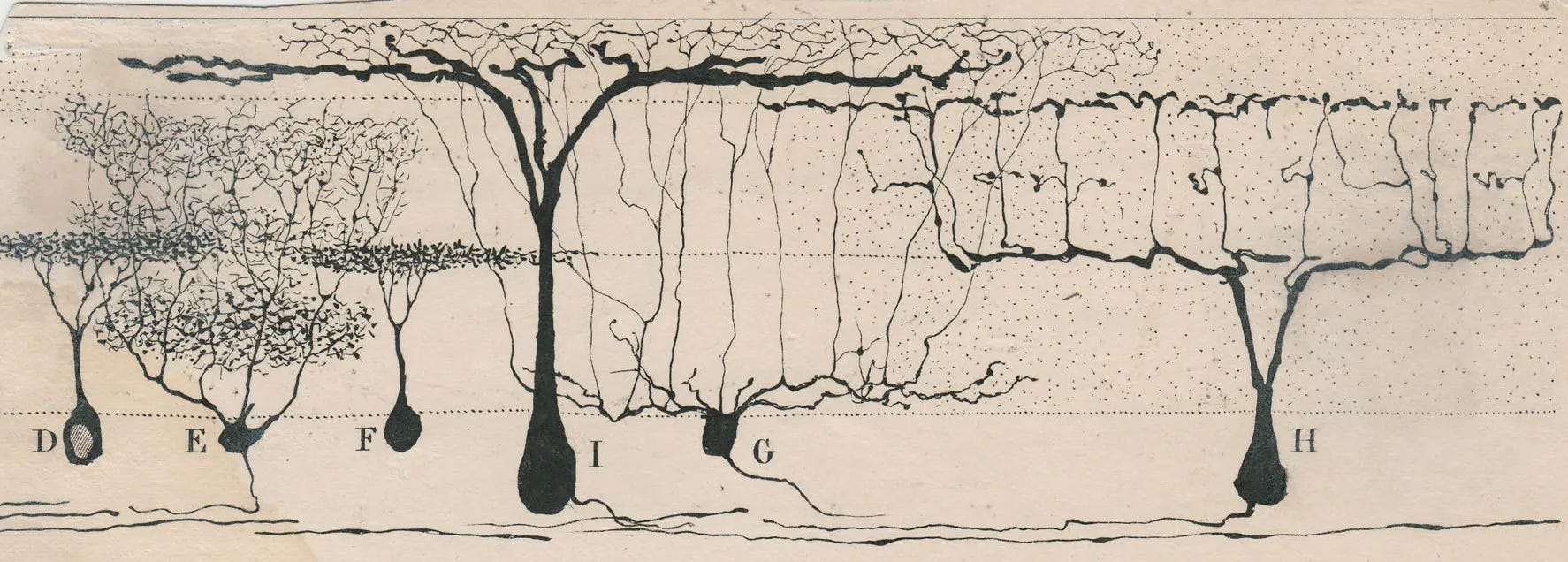
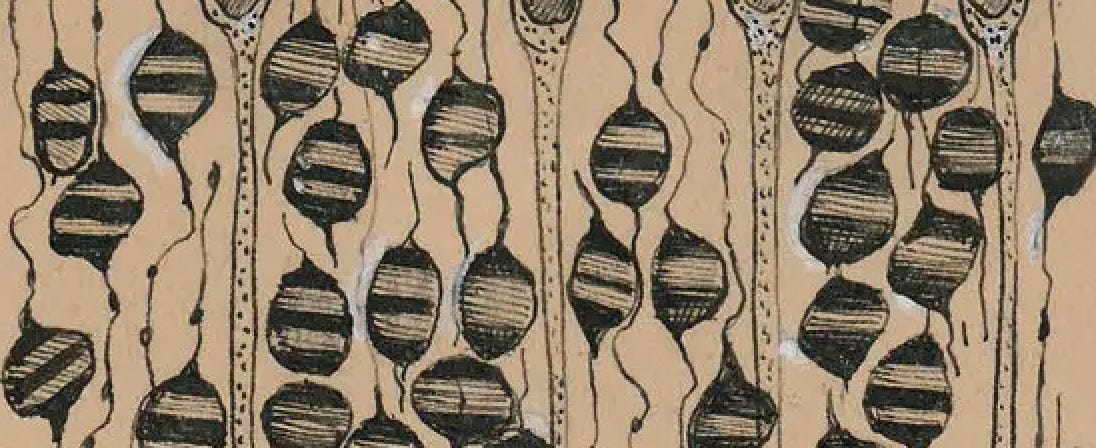
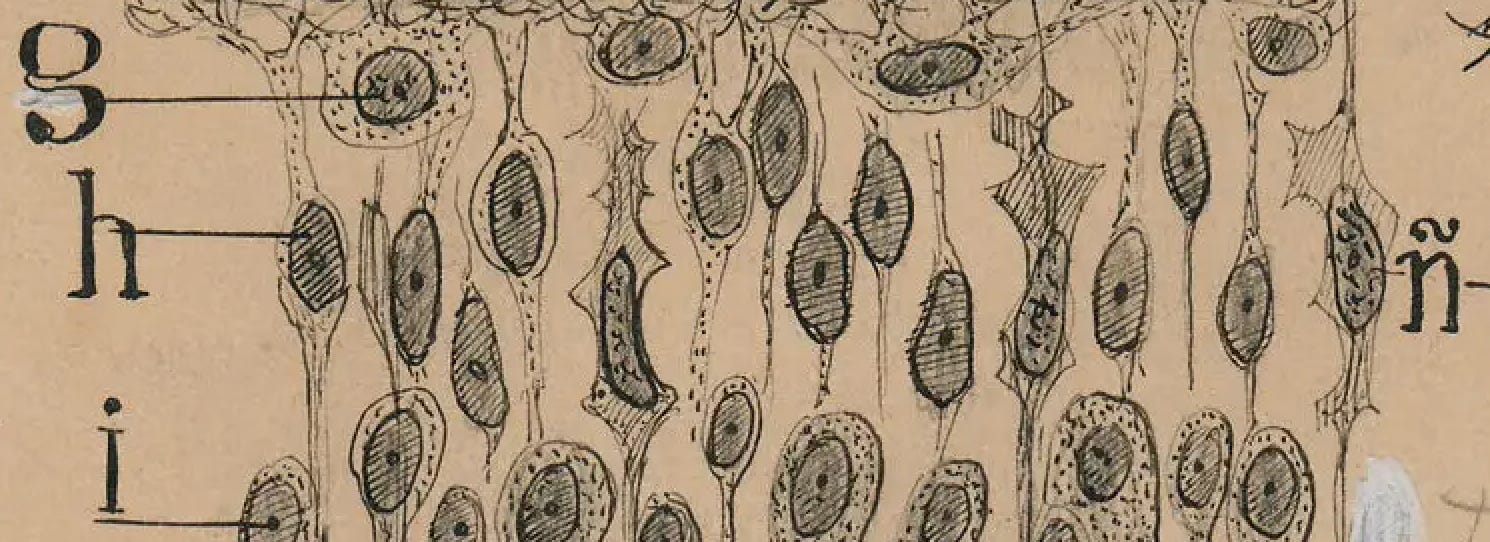
All illustrations, Santiago Ramón y Cajal, considered the father of modern neuroscience, are in the public domain.